We use Cookies!
Our website uses cookies. We use cookies to offer you a better browsing experience, analyze site traffic, personalize content, and serve targeted advertisements.
Learn more about how we use cookies and how to manage them by clicking "Cookie-settings".
[Measuring magnetism]
Measuring magnetism
The easiest way to determine whether magnetism is present is with a paperclip. By attaching one to a string and dangling it above the surface, you can locate the magnetic areas. If the product actually draws the paperclip towards it, and the paperclip sticks to it, the magnetic flux density is at least 20 gauss.
Iron filings will be held in place at levels above just 10 gauss. This is very little, as the Earth’s magnetism (depending on the location on Earth) is around 0.5 gauss.
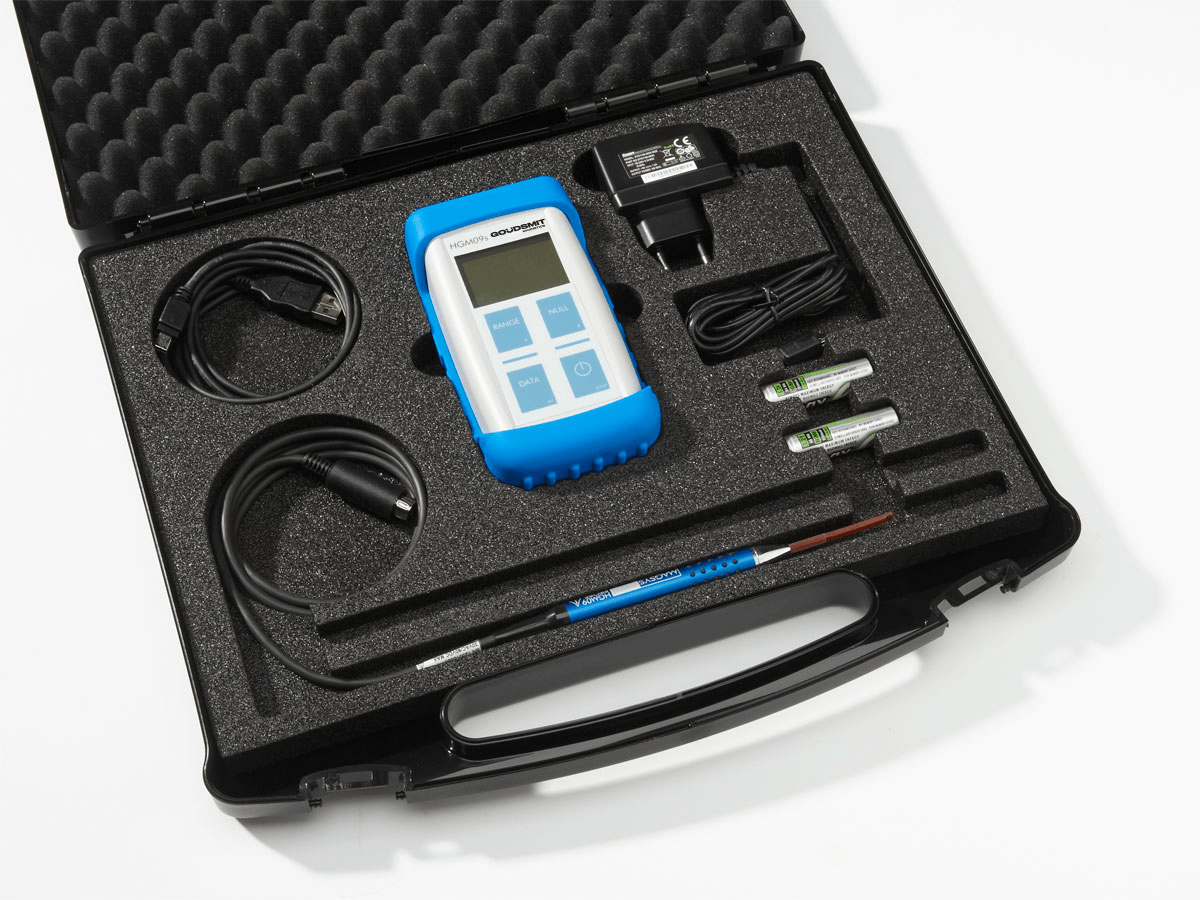
With a gauss meter - also called tesla meter or magnetometer - you measure locally - on the surface - the magnetic flux density in units of tesla, gauss, Ka/m or oersted. Flux density is a measure of the amount of magnetic flux through a surface. Goudsmit also conducts magnetic measurements on site if desired.
Gauss meter measurements use the Hall effect as the measuring principle. The sensor captures the magnetic flux density that is perpendicular to the sensor plane. The magnetic field generates an output voltage on the sensor, which is proportional to the product of the magnetic field strength and the induced current.
There are two types of gauss meters:
- 1D - for measurement on a surface
- 3D - for measurement of magnetic fields in a free space
Easily order gauss meters online.