

We use Cookies!
Our website uses cookies. We use cookies to offer you a better browsing experience, analyze site traffic, personalize content, and serve targeted advertisements.
Learn more about how we use cookies and how to manage them by clicking "Cookie-settings".
Ferromagnetic materials
Ferromagnetic materials are strongly attracted by magnets. Which metals are magnetic? And why does stainless steel sometimes respond to magnets and sometimes not?
Which materials does a magnet attract?
Of all magnetic materials, ferromagnetic materials are the most important in practice. These are materials that respond strongly enough to a magnetic field to be attracted by a magnet. Some ferromagnetic materials can also be used as magnetic materials themselves. The best-known ferromagnetic metals are:
- iron
- nickel
- cobalt
Many alloys are also magnetic, especially when they contain iron, nickel or cobalt. That is why many steel grades respond strongly to a magnet.

What does ferromagnetic mean?
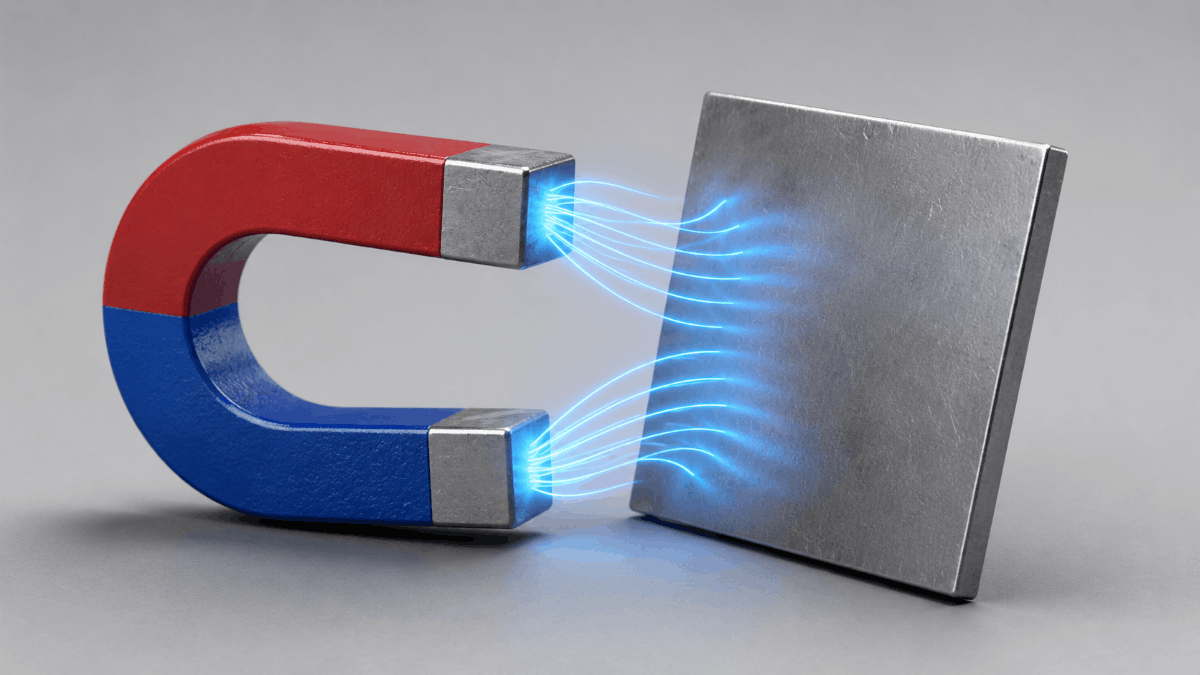
A material is ferromagnetic when the magnetic moments within the material can align. This creates strong attraction to an external magnetic field. In some materials, part of this magnetic alignment remains after the external magnetic field has been removed. The material is then magnetized.
In simple terms: a ferromagnetic material is clearly attracted by a magnet. This is the reaction you see when a magnet sticks to steel.
Magnetic or ferromagnetic?
In practice, the terms “magnetic” and “ferromagnetic” are often used interchangeably. Technically, there is a difference. An object is magnetic when it behaves as a magnet itself, with a north and south pole. An object is ferromagnetic when it is strongly attracted by a magnet. A steel plate is therefore usually ferromagnetic. Only when that plate has been magnetized does it behave as a magnet.
For industrial applications, the ferromagnetic property is usually the most important: is the material attracted strongly enough to be held, separated or detected?
Which metals are magnetic?
| Material | Response to a magnet | Explanation |
| Iron | Strongly magnetic | One of the most important ferromagnetic metals. |
| Steel | Usually strongly magnetic | Contains iron; response depends on composition and structure. |
| Cast iron | Usually magnetic | Iron-containing material with a clear magnetic response. |
| Nickel | Magnetic | One of the known ferromagnetic elements. |
| Cobalt | Magnetic | Ferromagnetic and used in certain magnetic materials. |
| Ferritic stainless steel | Magnetic | Includes certain 400-series stainless steel grades. |
| Martensitic stainless steel | Magnetic | Found in applications such as knives, shafts and wear parts. |
| Austenitic stainless steel | Usually non-magnetic or weakly magnetic | Examples include 304 and 316; may become locally slightly magnetic through deformation. |
| Neodymium iron boron | Hard magnetic | Used as a powerful permanent magnet material. |
| Samarium cobalt | Hard magnetic | Permanent magnet material, also suitable for higher temperatures. |
| Ferrite | Hard magnetic | Widely used ceramic magnet material. |
| Alnico | Hard magnetic | Alloy based on aluminium, nickel and cobalt. |
Which materials are not, or hardly, attracted?
Many metals are not magnetic in practice. A standard magnet will not stick to them.
| Material | Response to an ordinary magnet | Explanation |
| Aluminium | Non-magnetic | Not attracted by an ordinary magnet. |
| Copper | Non-magnetic | Not attracted by an ordinary magnet. |
| Brass | Non-magnetic | Alloy of copper and zinc. |
| Bronze | Non-magnetic | Copper-based alloy, often with tin. |
| Gold | Non-magnetic | A magnet test can help identify coarse contamination or counterfeit material. |
| Silver | Non-magnetic | Not attracted by an ordinary magnet. |
| Lead | Non-magnetic | No practical attractive force. |
| Zinc | Non-magnetic | No practical attractive force. |
| Tin | Non-magnetic | No practical attractive force. |
| Titanium | Non-magnetic | Often used where low magnetic influence is required. |
| Plastics, wood, glass, rubber | Non-magnetic | Only magnetically relevant if ferromagnetic material is present in or behind them. |
However, most of the metals mentioned above can be separated using eddy currents in recycling applications.
Why is not every metal magnetic?
Magnetism is determined by the internal structure of a material. In ferromagnetic materials, small magnetic regions, known as domains, can align in the same direction. They then reinforce one another, creating a strong response to a magnetic field.
In non-ferromagnetic materials, this does not happen, or only very weakly. That is why aluminium, copper or brass are not visibly attracted by an ordinary magnet, even though they are metals.
Hard and soft magnetic materials
Ferromagnetic materials are often divided into soft magnetic and hard magnetic materials.
Soft magnetic materials
Soft magnetic materials are easy to magnetize, but largely lose their magnetism when the magnetic field disappears. Annealed iron is one example. These materials are useful in magnetic circuits, electromagnets and applications where the magnetic field only needs to work temporarily. In magnetic separation, iron particles are attracted by the external magnetic field without needing to remain strongly magnetic themselves.

Hard magnetic materials
Hard magnetic materials remain magnetic after magnetization. They are used for permanent magnets. Examples include ferrite, neodymium iron boron, samarium cobalt and alnico. For permanent magnets, it is important that the material retains its magnetization, even under the influence of temperature, external magnetic fields, load and operating conditions.
Is stainless steel magnetic?
Stainless steel can be magnetic, but it does not have to be. The magnetic response mainly depends on the structure of the stainless steel.
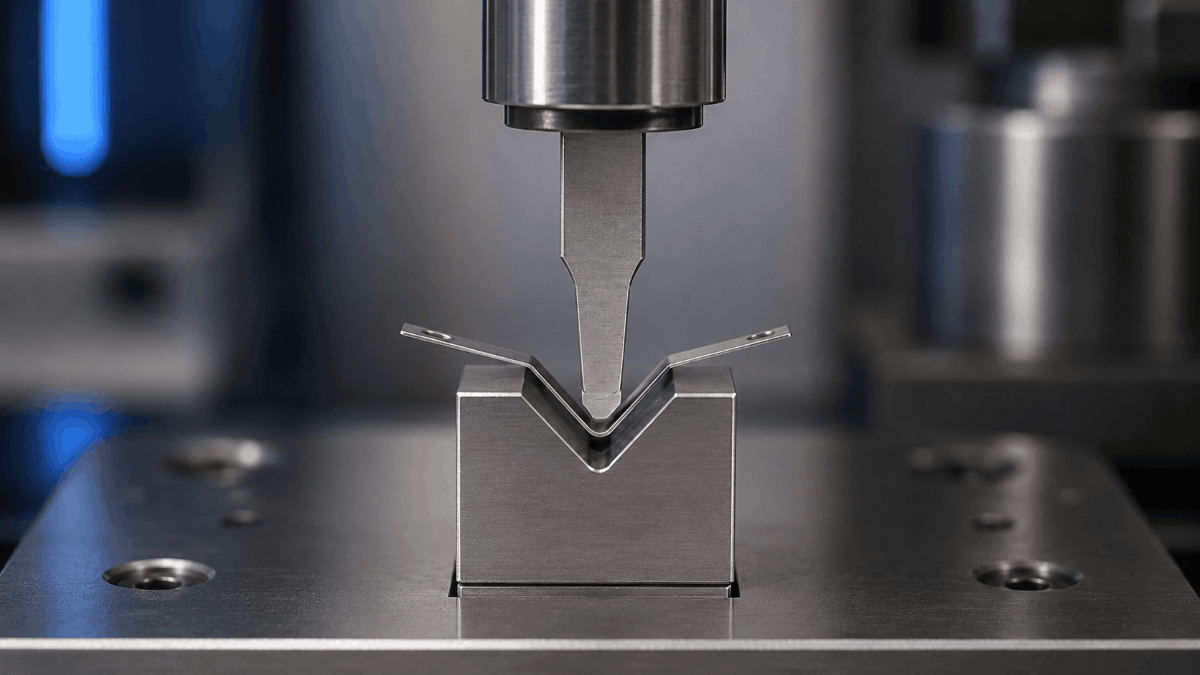
Ferritic and martensitic stainless steels are usually magnetic. Austenitic stainless steels, such as 304 and 316, are usually non-magnetic or only weakly magnetic in the annealed condition. Cold forming, bending, welding or mechanical processing can make austenitic stainless steel locally slightly magnetic. A magnet test is therefore useful as a quick indication, but not as a complete material identification method.
What does this mean for magnetic separation?
In magnetic separation, the question is not only whether a material is magnetic. Other factors also determine whether a particle will actually be captured:
- material composition;
- particle size and shape;
- distance to the magnet;
- strength and gradient of the magnetic field;
- product layer and flow speed;
- temperature;
- moisture, grease or product adhesion;
- design of the magnetic separator.
Ferromagnetic particles such as iron, steel and swarf can be captured effectively with the right magnetic separator. Weakly magnetic or non-ferromagnetic metals require a different approach. In recycling, aluminium and copper are often separated using eddy current separators.